
Video: 15 Humpback Behaviors to Spot on a Maui Whale Watching Tour
A whale watching tour can turn calm water into a front row seat for some seriously wild humpback behavior. From a full body breach to a quiet tail-up dive, every splash tells a different story.
Keep your eyes on the horizon, look for blows, birds, splashing, and white pectoral fins, and you will have a much better chance of recognizing what is happening on the water. Here are 15 humpback behaviors worth knowing before your next Maui whale watching tour.
TL;DR: 15 Humpback Whale Behaviors to Spot on a Maui Whale Watching Tour
- Easiest to spot: Breaches, tail slaps, pectoral slaps, and spyhops are among the easiest humpback behaviors to recognize at the surface.
- Unique flukes: Fluke patterns are unique to individual humpbacks and can help identify whales over time.
- Feeding note: Surface lunge feeding and bubble-net feeding are not typical behaviors for humpbacks in Hawaii.
- Memorable encounters: Mother and calf pairs and competitive groups offer very different, equally memorable kinds of whale activity.
Table of Contents
- 1. Breaching: The Full Body Launch
- 2. Blow or Spout: The Classic Puff of Mist
- 3. Fluking: The Tail-Up Dive
- 4. Peduncle Throw: The Athletic Sideways Splash
- 5. Tail Slap or Lobtail: Repeated Surface Smacks
- 6. Pectoral Fin Slap: The Big White Splash
- 7. Head Lunge or Chin Slap: A Sudden Surface Pop
- 8. Spyhop: A Whale Looking Around
- 9. Surface Lunge Feeding: An Open-Mouth Burst
- 10. Bubble-Net Feeding Signs: Birds and Boiling Water
- 11. Rolling Belly-Up Turns: White Fins in the Water
- 12. Logging: The Floating Log Rest
- 13. Tail Sailing: The Rare Upright Tail
- 14. Mother and Calf Behavior: Short Dives and Clumsy Splashes
- 15. Competitive Groups: Churning Water and Big Energy
- Plan for a Respectful Maui Whale Watching Tour
1. Breaching: The Full Body Launch
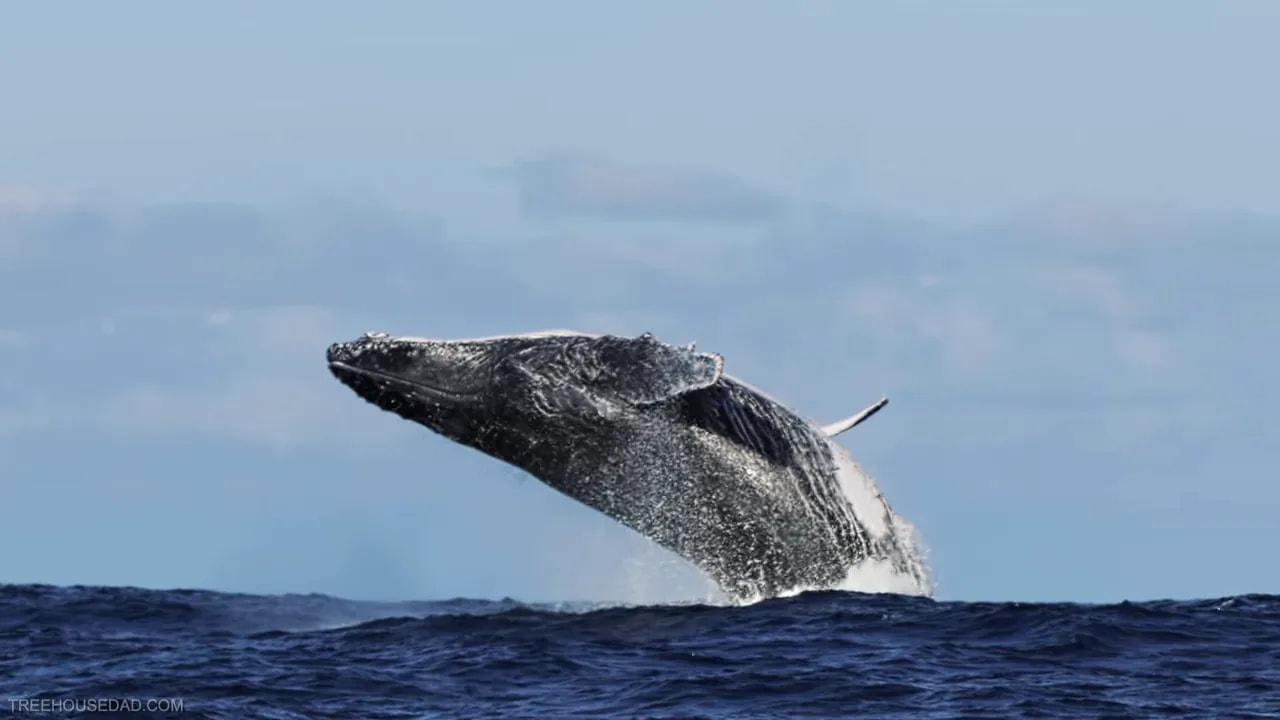
Breaching may be play, communication, or a way to dislodge parasites. Whatever the reason, it is one of the most dramatic moments you can get on a Maui whale watching tour.
2. Blow or Spout: The Classic Puff of Mist
Often, the first sign of a whale is not the whale itself. It is the blow, or spout, rising above the surface as the animal exhales.
A bigger, taller blow generally suggests an adult humpback. Scan for that quick burst of mist, especially when the whale’s dark back is still hard to pick out against the water.
3. Fluking: The Tail-Up Dive
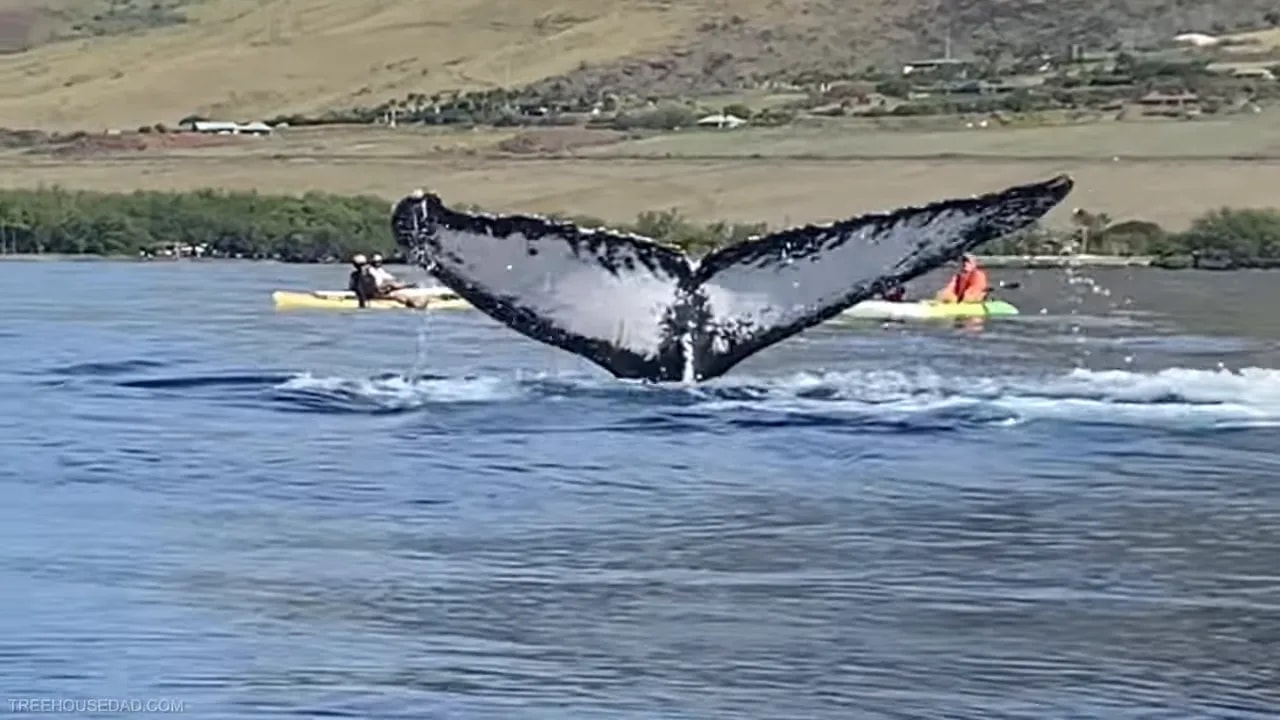
Fluking happens when a humpback lifts its tail high before heading into a deeper dive. It is a classic, clean whale moment and a great opportunity to notice the underside of the fluke.
Each humpback’s tail pattern is unique, much like a fingerprint. The markings help researchers identify individual whales over time.
4. Peduncle Throw: The Athletic Sideways Splash
The peduncle is the powerful section of the body just ahead of the tail. During a peduncle throw, the whale hurls its tail and rear body sideways out of the water.
It is a more athletic-looking move than a standard tail slap, with a big sideways crash that can send spray flying in every direction.
5. Tail Slap or Lobtail: Repeated Surface Smacks
A tail slap, also called lobtailing, is exactly what it sounds like. The whale repeatedly smacks its tail on the water’s surface.
Those slaps can be loud enough to notice from far away. They may be a form of communication, or they may signal agitation. Either way, repeated splashing makes this behavior easy to spot on a Maui whale watching tour.
6. Pectoral Fin Slap: The Big White Splash
Humpbacks have famously long pectoral fins, and they know how to use them. A pectoral fin slap happens when one of those long side fins crashes down on the surface.
Look for a bright flash of white followed by a loud, splashy impact. This is one of the easier actions to see from a distance because the fins are so large and eye-catching.
7. Head Lunge or Chin Slap: A Sudden Surface Pop
It can look abrupt and powerful. This behavior is thought to be connected to feeding or display behavior, and it is usually followed by a very noticeable burst of spray.
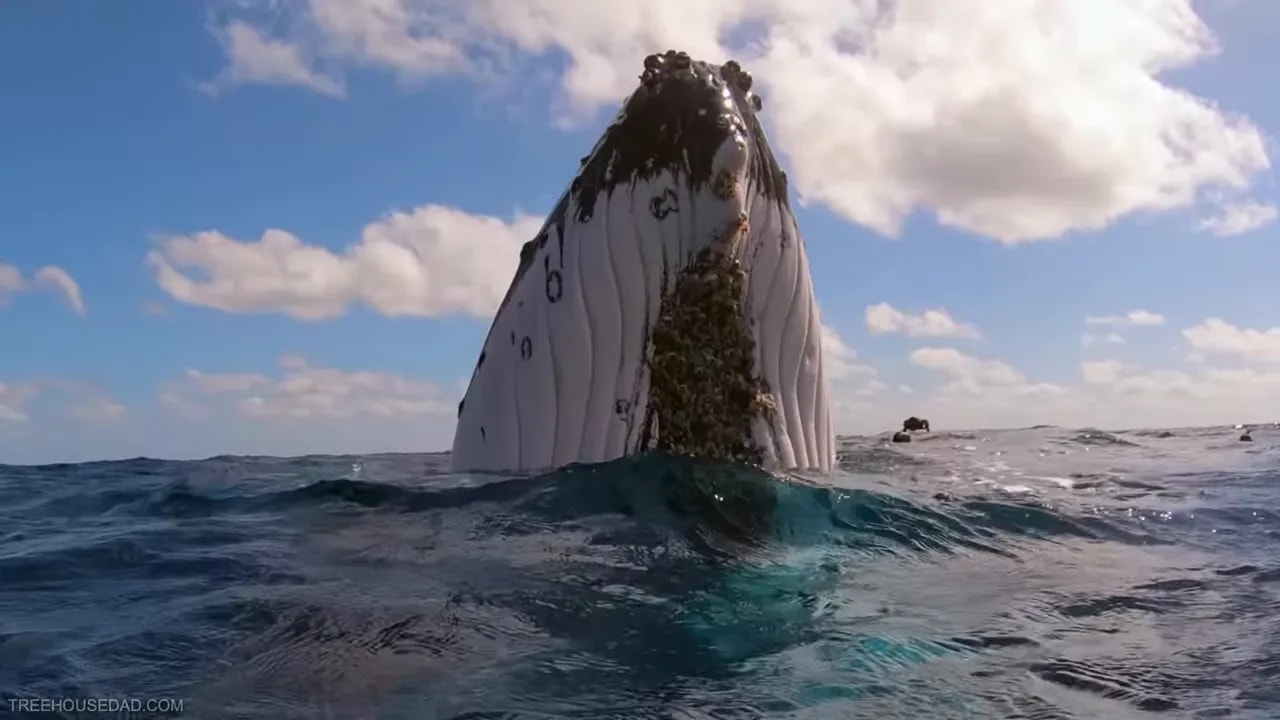
8. Spyhop: A Whale Looking Around
9. Surface Lunge Feeding: An Open-Mouth Burst
Surface lunge feeding is when a whale bursts through the surface with its mouth open, often with birds gathering nearby to take advantage of the same baitfish.
This is a remarkable feeding scene, but it is not a typical Hawaii behavior. Humpbacks visiting Maui are primarily here to breed, give birth, and nurse calves rather than feed.
For practical seasonal planning on a Maui whale watching tour, check current guidance from the National Oceanic and Atmospheric Administration’s humpback whale resources and always give whales plenty of space.
10. Bubble-Net Feeding Signs: Birds and Boiling Water
Bubble-net feeding involves whales herding prey below the surface, often creating a concentrated feeding opportunity. Signs can include birds suddenly dive-bombing and fish boiling at the surface.
Like surface lunge feeding, this is not something to expect in Hawaii. Still, knowing the signs helps make sense of humpback behavior in other feeding grounds.
11. Rolling Belly-Up Turns: White Fins in the Water
A rolling turn is a slow, relaxed roll that may reveal a humpback’s pale belly or white pectoral fins. These easy, graceful movements are often social or playful.
Do not confuse a slow roll with a tail-up dive. With a roll, the whale tends to stay near the surface and simply turns its body, flashing bright patches beneath the water.
12. Logging: The Floating Log Rest
Logging is the whale version of taking it easy. The animal rests nearly still at the surface, resembling a floating log.
Look for gentle breaths, minimal movement, and a whale that seems to be lingering in one area. A quiet encounter can be just as memorable as a breach, especially when you know the whale may be resting.
13. Tail Sailing: The Rare Upright Tail
Tail sailing is rare, which is exactly why it is so cool to see. The whale holds its tail upright out of the water and keeps it motionless for at least a moment.
It is not a tail slap and not a fluke during a dive. The key detail is that the tail remains upright, almost like a sail catching the breeze.
14. Mother and Calf Behavior: Short Dives and Clumsy Splashes
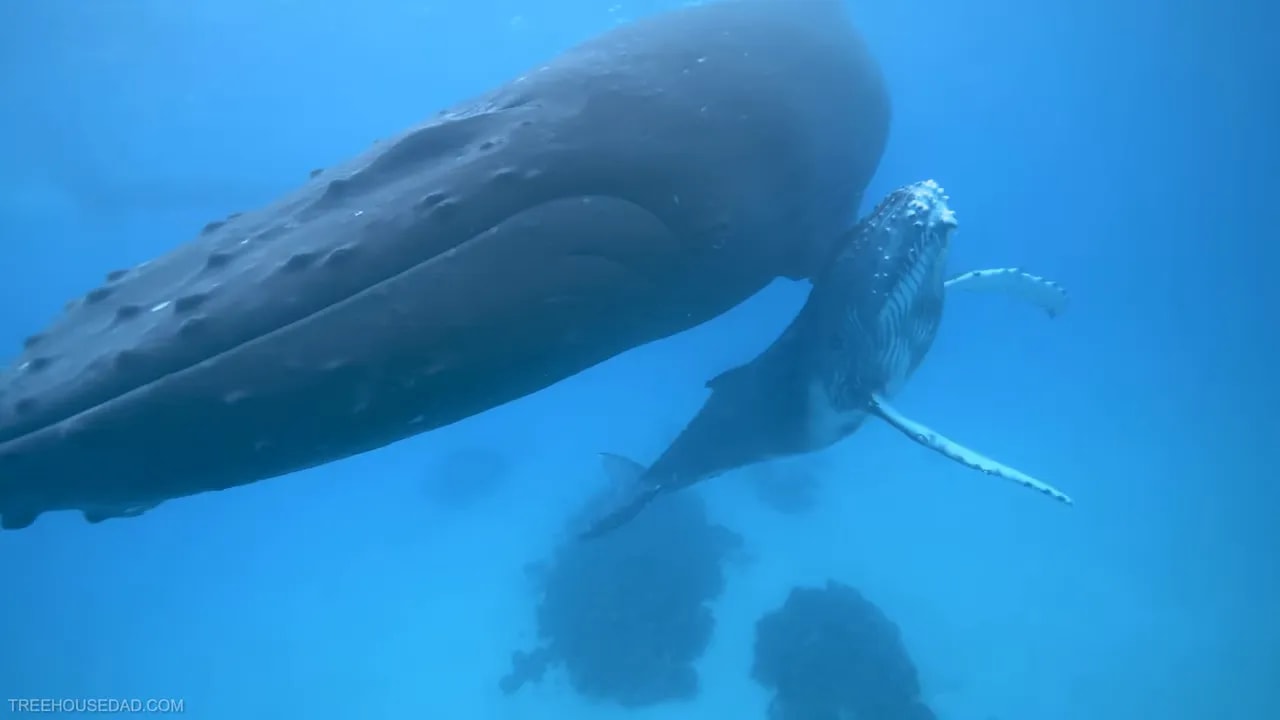
Mother and calf pairs are a major highlight of a Maui whale watching tour. Calves often breach more than adults, and their fin slaps and tail slaps can look adorably uncoordinated.
A calf usually stays close to its mother and makes frequent short dives. Seeing the pair travel together is a good reminder that Maui’s warm waters are an important seasonal nursery area for humpbacks.
15. Competitive Groups: Churning Water and Big Energy
Competitive groups are hard to miss. Multiple whales gather close together, circling, churning the water, and creating a whole lot of splashing.
These groups can involve males jockeying around a female. The intensity can escalate, and whales may even strike one another hard enough that their tubercles, the bumps on the head, bleed.
If you encounter this on a Maui whale watching tour, expect fast movement and unpredictable surface action. It is a powerful reminder that humpback season is not just about peaceful breaches and tail waves. There is serious competition happening out there, too.
Plan for a Respectful Maui Whale Watching Tour
The best encounters happen when whales get to behave naturally. Stay patient, respect distance requirements, and let the animals choose how close they want to be. A quiet blow, a fluke on a dive, or a calf rolling beside its mother can be every bit as special as the biggest breach.
For a seasonal adventure that combines time in the water with humpback spotting, explore the Molokini Crater Snorkel and Whale Watching Tour. It is a great way to pair Maui’s underwater scenery with the excitement of whale season.
Bring binoculars if you have them, keep scanning the horizon, and remember the basics: blow, back, fluke, splash. Those four clues can turn a Maui whale watching tour into a much richer experience.
Frequently Asked Questions About a Maui Whale Watching Tour
What humpback behavior is easiest to spot on a Maui whale watching tour?
Blows, breaches, tail slaps, and pectoral fin slaps are usually the easiest behaviors to spot because they create obvious mist, movement, or splashing above the water.
Do humpback whales feed while they are in Maui?
Surface lunge feeding and bubble-net feeding are not typical in Hawaii. Humpbacks visiting Maui are generally focused on breeding, calving, nursing, and social behavior.
What does it mean when a humpback raises its tail before diving?
This is called fluking. The whale raises its tail as it prepares for a deeper dive, sometimes revealing the distinctive markings on the underside of its fluke.
What are competitive groups of humpback whales?
Competitive groups involve several whales moving closely together, splashing and circling as males jockey around a female. They can be energetic, fast-moving, and intense.